

Understanding patient retention, collections, profitability, and the financial realities of going out of network
For many dental practice owners, the biggest concern about leaving a PPO is financial.
What happens to revenue if patients leave? Will the schedule suddenly open up? How long does it take to replace lost production? Can the practice actually become more profitable with fewer insurance-driven patients?
These are reasonable questions, especially for an established practice with significant revenue already at stake.
The financial impact of dropping PPO plans is rarely as simple as “lose patients, lose revenue.” A practice may experience changes in patient volume and production while simultaneously reducing contractual write-offs and increasing revenue per visit. Profitability can shift even when the schedule looks different.
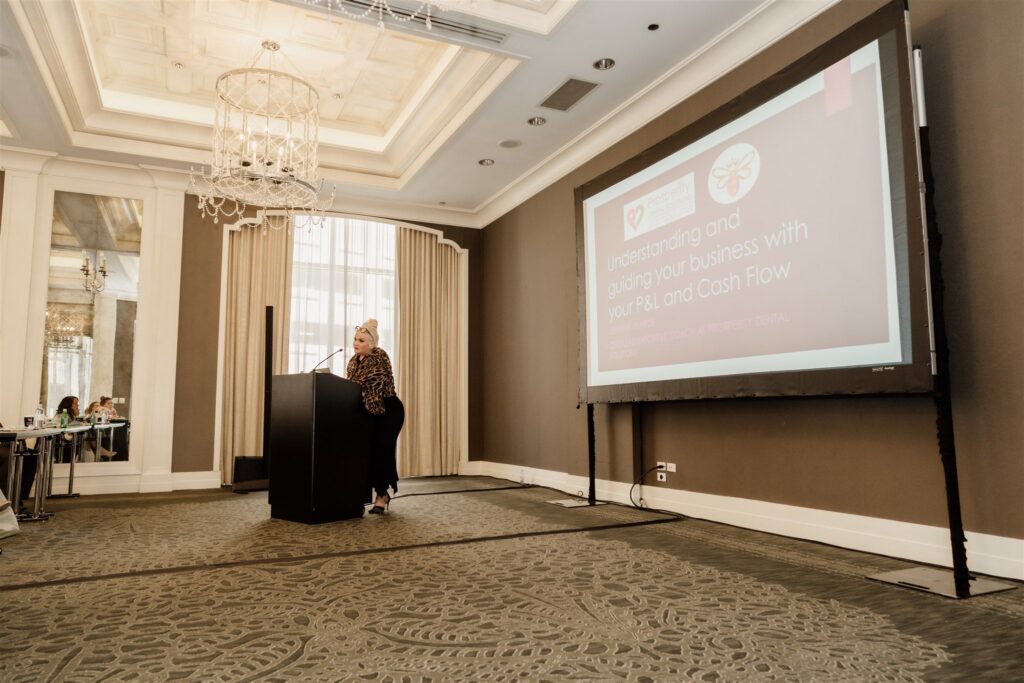
At Prosperity Dental Solutions, Coach Jennifer Pearce helps dental practice owners evaluate these variables before making an out-of-network transition. The goal is to understand the economics of your specific practice and build a strategy around real numbers rather than fear.
First, Separate Production From Revenue
One of the most important concepts to understand before leaving a PPO is the difference between your usual fees, adjusted production, collections, and profit.
Imagine your usual fee for a procedure is $1,500, while a PPO contract allows $1,050.
The practice performs $1,500 worth of dentistry, but $450 disappears through the contractual adjustment before the collection process even begins.
Multiply that difference across hundreds or thousands of procedures, and PPO write-offs can represent a significant amount of potential revenue.
This is why a highly productive dental practice can still struggle with profitability.
Before evaluating a PPO exit, determine how much each insurance contract is actually costing the business in adjustments. Looking only at total annual production does not provide enough information.
Will You Lose Patients When You Go Out of Network?
Probably some. That possibility deserves to be included in your financial planning.
Patient retention following a PPO exit depends on many factors, including the market, the insurance plan, your fees, your patient demographics, competition, the strength of your patient relationships, and how effectively the transition is communicated.
A practice should model several potential retention scenarios before leaving a plan.
For example, what happens financially if you retain 90% of affected patients? What about 80%? What would the numbers look like at 70%?
This exercise gives the owner a much more useful picture of risk. The important point is that patient count and profitability are not the same metric.
A practice could theoretically see fewer patients while generating stronger revenue per patient and improving overall profitability. The numbers have to be modeled together.
The PPO Write-Off Matters More Than Many Owners Realize
Consider a simplified example.
Suppose a practice generates $500,000 in usual-fee production associated with one PPO, but contractual adjustments reduce that amount by 30%.
That represents $150,000 in adjustments.
If the practice leaves the network, some patients may decide to leave. Yet patients who remain may generate significantly more collectible revenue per procedure, depending on the practice’s fees, out-of-network benefits, financial policies, and collection performance.
This does not mean dropping the plan automatically produces an additional $150,000.
It demonstrates why the financial calculation is more nuanced than counting how many patients might leave.
You need to understand:
Current PPO revenue + contractual adjustments + patient retention + future fee collections + available capacity + operating costs.
Those pieces together tell a much more accurate story.
Revenue May Change Before It Stabilizes
Practice owners should also be realistic about timing.
An out-of-network transition can create a temporary adjustment period.
Patients may call with questions. Some appointments may cancel. The schedule could develop openings that weren’t there previously. Collections patterns may change as the team adjusts to new financial arrangements.
This is one reason a PPO exit should be planned well in advance.
Your practice needs adequate cash flow, strong financial policies, a trained team, and clear metrics for monitoring the transition.
Making a decision one month and sending termination notices the next without preparing the business creates unnecessary risk.
Look at Revenue Per Patient and Revenue Per Hour
A packed schedule can make a practice feel financially secure. It can also hide inefficiency.
If leaving low-reimbursement plans reduces patient volume, the resulting capacity can potentially be used more strategically.
The practice may have more room for comprehensive treatment. Providers may have more time for patient education. The schedule can be designed around productive procedures instead of maximum volume.
Start looking beyond total production and monitor metrics such as:
- Revenue per patient
- Production per clinical hour
- Hygiene production
- Collection percentage
- Case acceptance
- New-patient value
- Overhead
- Profit margin
These metrics help reveal whether your practice is becoming financially healthier, rather than simply busier.
What Happens to Overhead?
Revenue gets most of the attention during a PPO transition, but overhead deserves equal consideration.
A high-volume insurance model may require significant resources to support the number of patients moving through the practice.
That can affect staffing, supplies, administrative workload, scheduling demands, billing, and insurance management. Moving toward a fee-for-service dental practice can change those dynamics.
The goal should be to evaluate the entire financial model. Increasing collections is valuable, but increasing collections while controlling expenses and creating greater operational efficiency is where profitability can improve substantially.
For a $3M+ dental practice, even relatively small changes in margins can have a meaningful effect on owner income.
Your Hygiene Department Can Play an Important Role
Hygiene should be part of the financial conversation when evaluating an out-of-network transition.
A strong hygiene department supports patient retention, comprehensive care, treatment discovery, periodontal health, and long-term relationships.
Patients often have especially strong connections with their hygienists. That relationship can become valuable when patients are deciding whether to stay with a practice after an insurance change.
The hygiene team also needs to understand the transition. Confidence across the entire practice matters. Patients should hear a consistent message about the quality of care and the reasons behind the practice’s decisions.
Case Acceptance Becomes Even More Important
An out-of-network dental practice needs to communicate value extremely well.
Your team cannot rely on “your insurance covers it” as the primary reason for patients to move forward.
Clinical recommendations should be explained clearly. Financial conversations need to be comfortable and confident. Patients should understand their diagnosis, available options, expected outcomes, and the value of addressing their health.
Strong case acceptance creates a healthier financial foundation for an FFS practice. It also makes the transition less dependent on constantly finding new patients to replace volume.
Consider Which PPO to Drop First
Leaving insurance does not have to happen all at once.
For many practices, a strategic PPO exit happens in stages.
Start by evaluating each plan according to factors such as reimbursement, contractual write-offs, patient volume, administrative burden, and overall contribution to the practice.
A poorly reimbursing plan representing a relatively small portion of your patient base may present a very different level of risk than your largest PPO.
A phased transition also gives leadership time to study the results.
After the first exit, you can evaluate patient retention, collections, profitability, scheduling, case acceptance, and team performance before determining the next move.
Patient Communication Can Affect the Financial Outcome
How you communicate a PPO exit matters.
A generic letter explaining that the practice will “no longer accept” a patient’s insurance can create unnecessary confusion. Patients may assume they can no longer receive care at the practice.
Your communication strategy should clearly explain what is changing, what is staying the same, how out-of-network benefits work, and what patients can expect financially.
Your front office needs training before those communications are sent.
If patients call with concerns and receive hesitant or inconsistent answers, retention can suffer.
The transition needs to make sense to the team before the team can make it understandable to patients.

Build a Financial Forecast Before Making the Decision
A PPO exit should be modeled before it is implemented.
At minimum, review:
- Active patients associated with the plan
- Annual production by plan
- Actual collections
- Contractual adjustments
- Average revenue per patient
- Case acceptance
- Hygiene performance
- Current capacity
- New-patient flow
- Fixed and variable overhead
- Cash reserves
Then model different patient-retention scenarios.
For a high-producing dental practice, this analysis becomes particularly important. A decision affecting even 10% of a $3 million business deserves careful planning.
The numbers should help you determine how much patient attrition the practice can absorb and still reach its financial goals.
Revenue Is Only One Part of the Decision
Financial performance matters, but many dentists considering an out-of-network model are also trying to change how they practice.
They may want more control over appointment length, treatment recommendations, technology investments, team development, or the overall patient experience.
Others simply want to stop running at maximum capacity every day.
Those goals have economic value too.
A practice producing similar revenue with stronger margins, fewer rushed appointments, and greater owner capacity may be far healthier than one generating impressive top-line production at the expense of the doctor and team.
That is why Prosperity looks at the practice as a complete business rather than reducing an FFS transition to one revenue target.
Build Your PPO Exit Around Your Numbers
There is no universal answer to how much revenue a dental practice will gain or lose after dropping a PPO plan.
Your outcome depends on your current contracts, fees, patients, retention, case acceptance, systems, overhead, and execution. Those variables can be analyzed.
Coach Jennifer Pearce and Prosperity Dental Solutions help dental practice owners evaluate the financial and operational realities of transitioning out of network, prepare their teams, strengthen patient communication, and develop a strategy for the practice they want to operate afterward.
If you’re considering dropping PPO plans, start with your numbers before making the decision.
Visit Prosperity Dental Solutions to learn more about fee-for-service dental coaching and connect with Coach Jennifer about an out-of-network strategy for your practice.